
Pool Replastering in Naperville, IL & Chicago Suburbs

JG Pool Service repairs and resurfaces cracked, stained, and aging pool plaster throughout Naperville, Deerfield, and the surrounding Chicago suburbs.
5-YR
Workmanship warranty on every pool replastering and resurfacing project.
100%
Free, no-obligation estimate before any pool repair or resurfacing project begins.
7 DAYS
A week, we're reachable for pool repair calls across the Chicago suburbs.
24/7
Emergency pool repair response for leaks, pump failures, and equipment breakdowns.
Why Pool Plaster Fails in Chicago's Freeze-Thaw Climate

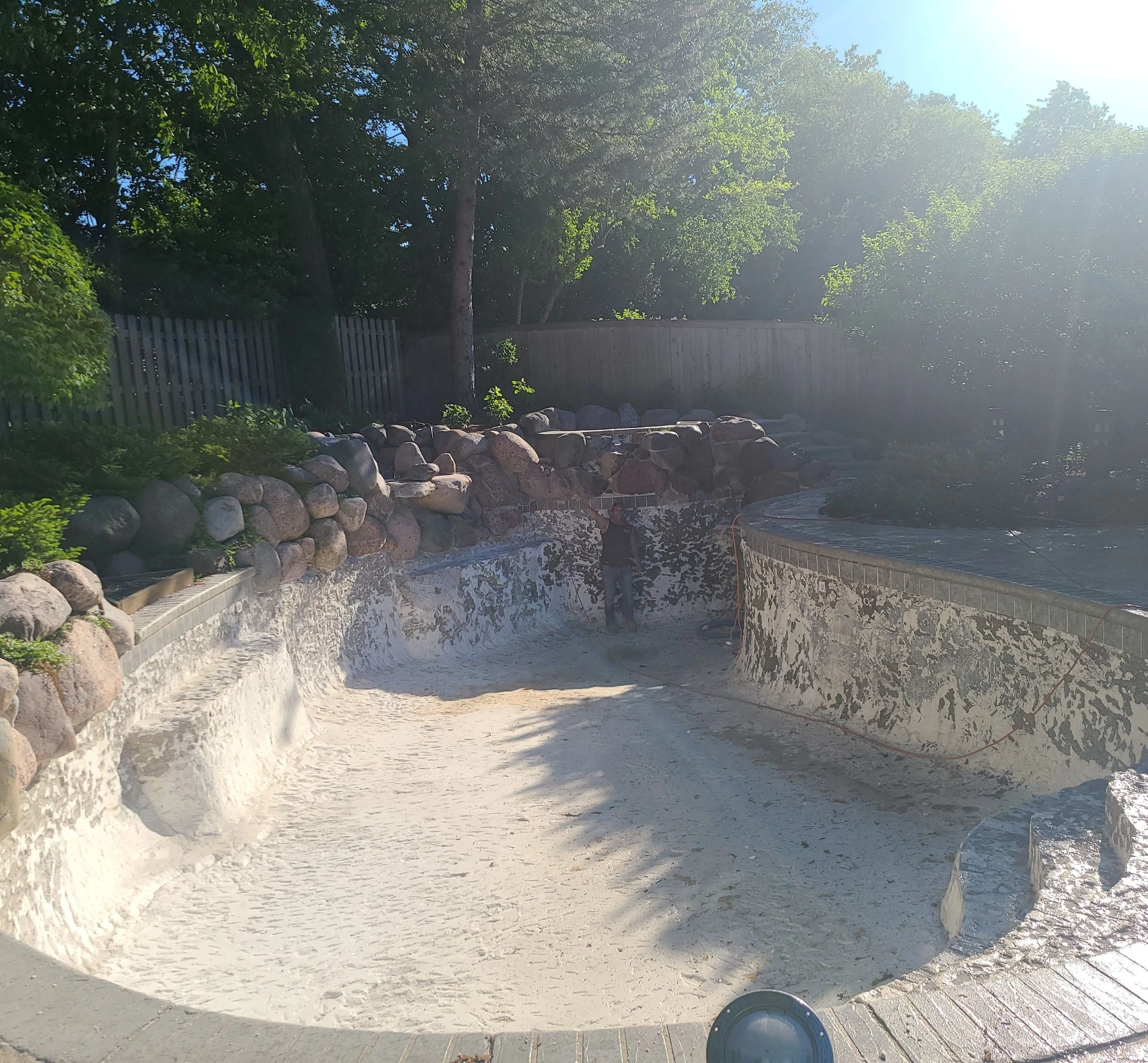
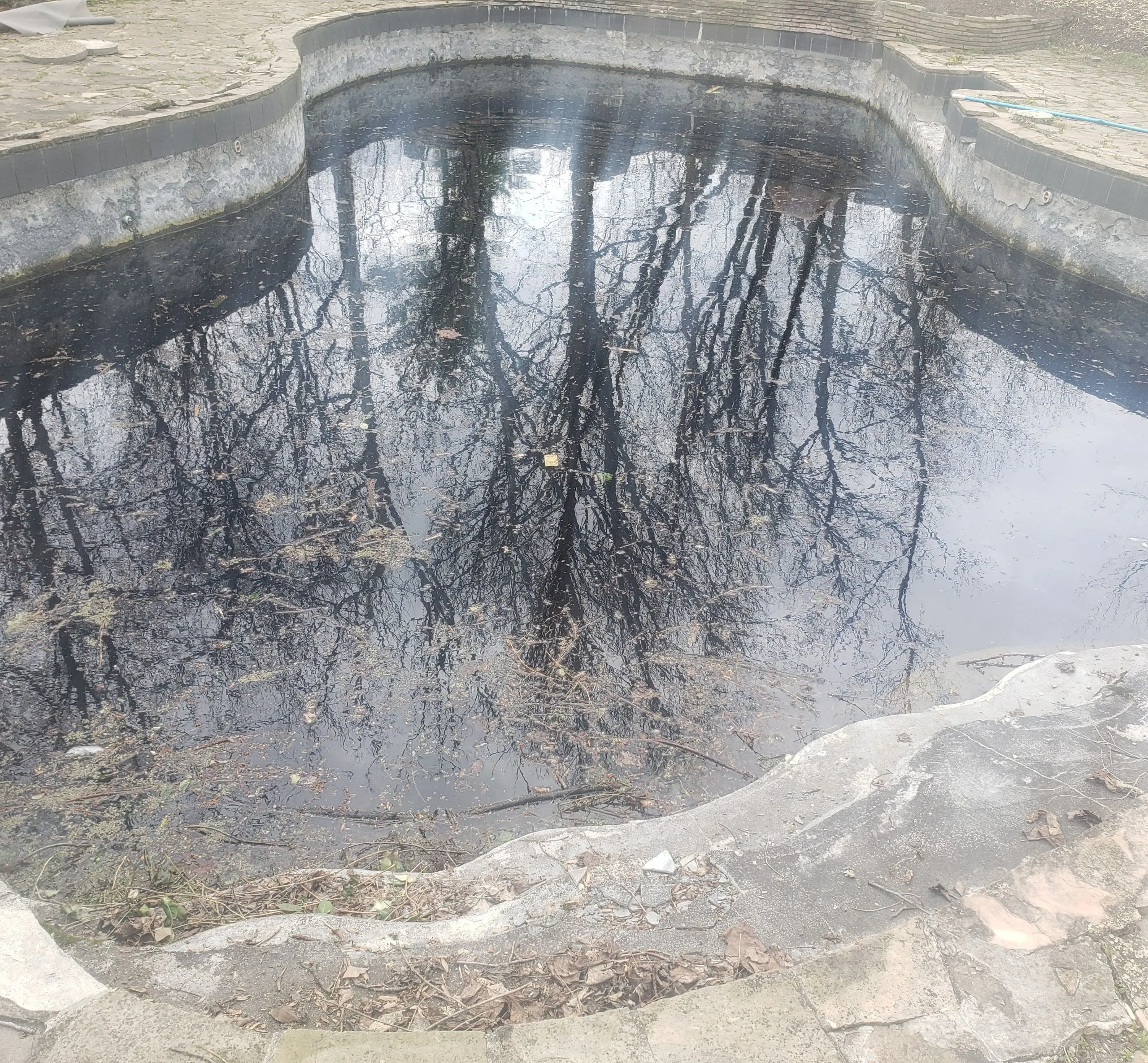
A gunite or concrete pool shell is only as good as the plaster layer sealing it, and in the Chicago suburbs that layer works harder than in almost any other climate zone in the country. Water trapped in hairline cracks freezes and expands through roughly four to five months of sub-freezing temperatures every winter, and each freeze-thaw cycle widens the crack slightly further than the last one. A pool that was properly plastered a decade ago in Naperville is now showing exactly the kind of spider-web cracking and rough, sandpaper texture this cycle produces.


Winterization habits common across DuPage and Lake County add a second layer of stress. Pools left with residual water in the plumbing or improperly balanced chemistry over the closed season come out of winter with etched, pitted surfaces even when the shell itself never cracked. Add in the calcium-heavy well and municipal water found in much of the Chicago suburbs, and scaling builds on top of the etching, leaving a rough, discolored surface that no amount of brushing or acid washing will fully correct.


The result is a plaster surface that degrades faster here than the national average timeline suggests. Most manufacturers rate standard white plaster at roughly seven to twelve years; in this climate, ten years is closer to the ceiling than the floor, and pools with a north-facing shade line or heavy tree cover often show failure signs sooner. Replastering at the right time, before the underlying gunite is exposed, is what keeps a resurfacing job from turning into a structural repair.

01

Freeze-Thaw Cracking

Cracks that start as fine, barely visible lines in the plaster widen every winter as trapped moisture expands and contracts inside them, and by the third or fourth season they're wide enough to catch a fingernail and rough enough to scrape bare feet. Left alone, these cracks eventually reach the gunite shell underneath, at which point the repair shifts from a cosmetic resurfacing job to a structural one.
02

Chemical Imbalance and Etching

Low pH or low total alkalinity slowly dissolves the calcium hydroxide that gives plaster its hardness, leaving a surface that feels soft, chalky, or rough underfoot even though nothing appears visibly broken. Etched plaster also loses its ability to hold color evenly, which is why an aging pool often develops a blotchy, uneven tone years before the surface actually fails structurally.
03

Age and UV Exposure

Direct sun exposure breaks down the surface bond of exterior-grade plaster over time, and pools with long daily sun exposure in open Naperville and Deerfield backyards tend to show fading and surface chalking earlier than shaded pools. Once the top layer starts to chalk and rub off on swimsuits, the plaster has entered its final one to two seasons of useful life.
Benefits of Professional Pool Replastering
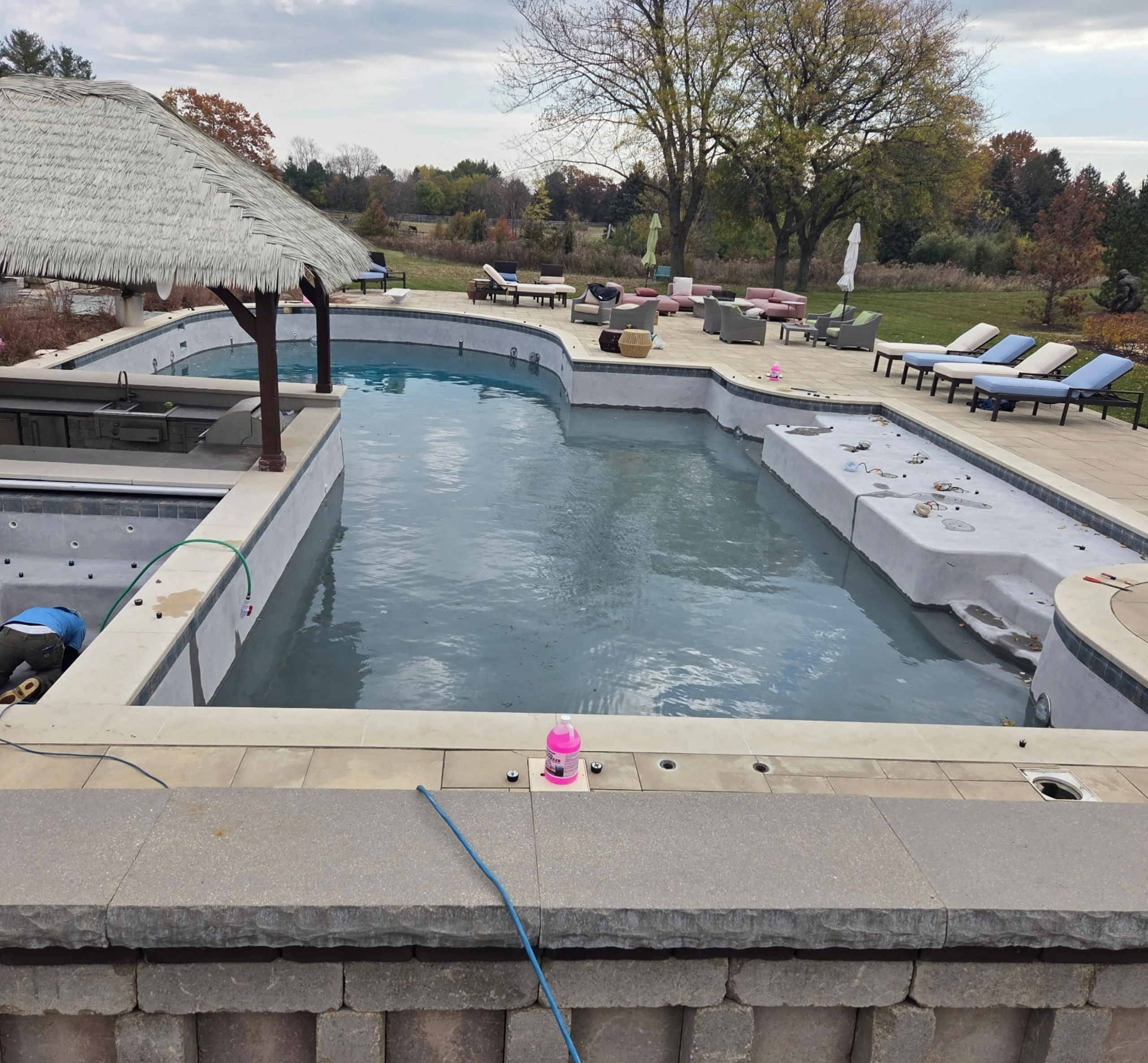
A worn plaster surface doesn't just look tired, it changes how the pool behaves for the next ten to twelve years. Rough, etched plaster holds onto algae and chemical demand long before it becomes visibly damaged. Replastering resets that behavior from the surface down.

Replastering does more than restore the way a pool looks. A correctly applied plaster, quartz, or pebble surface resets the seal between the water and the gunite shell, which is the single factor that determines how the next decade of freeze-thaw cycles will treat the pool. Getting the surface prep, bond coat, and cure process right the first time is what separates a resurfacing job that lasts twelve years from one that starts cracking again in three.


That distinction matters more in the Chicago suburbs than in most other markets, because a rushed or undersized resurfacing job doesn't just look worse sooner, it fails on the same freeze-thaw timeline that took down the original plaster. A pool owner comparing quotes is often comparing very different scopes of work under the same label: one contractor chipping the old plaster down to bare gunite and patching every crack before the new finish goes on, another skim-coating over existing damage to cut the job short. Only the first approach actually resets the clock on the pool's structural seal.


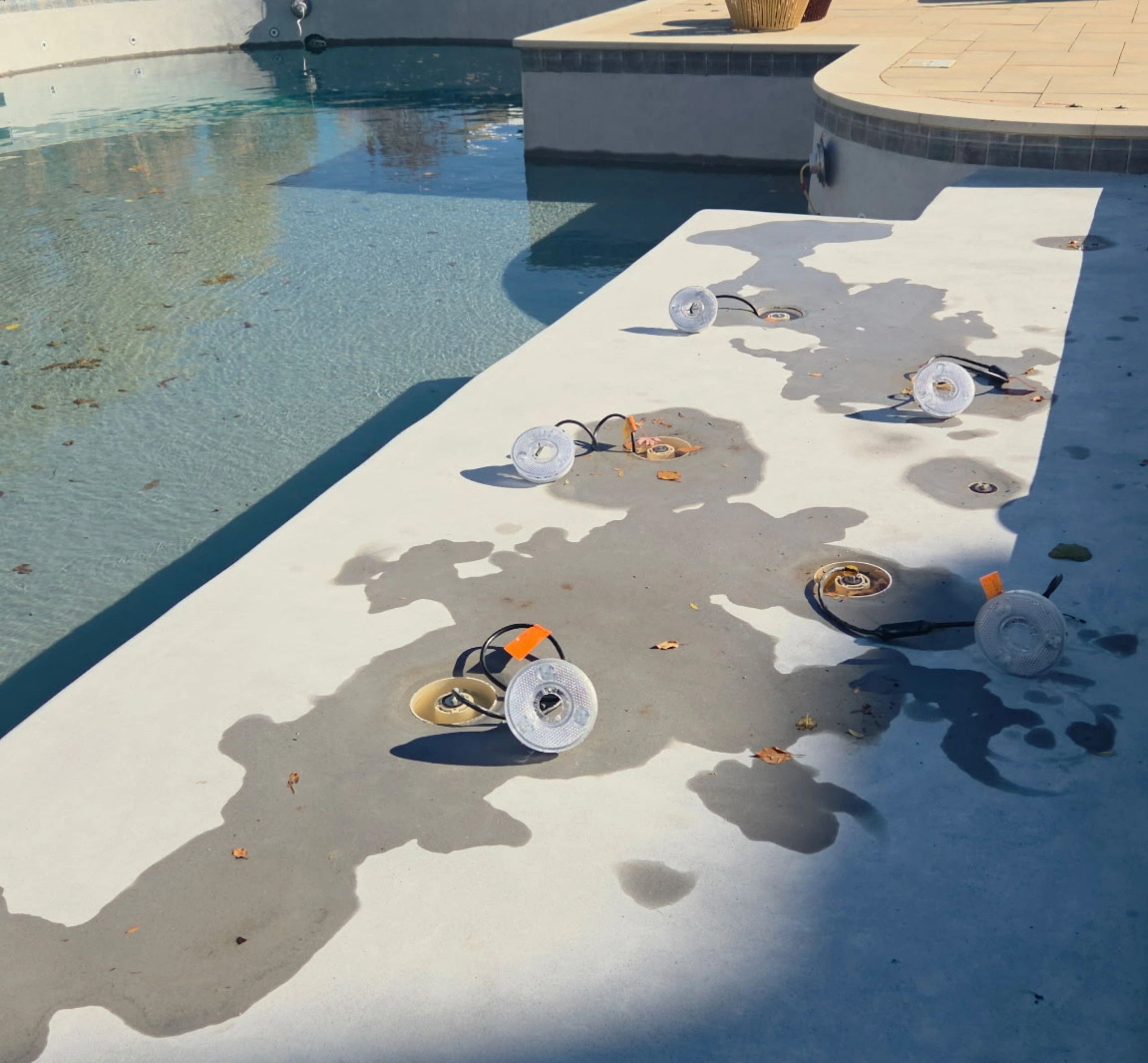
The homeowners who get the most out of a replastering project tend to be the ones who treat it as a full reset rather than a patch job, addressing tile, lighting, or plumbing issues in the same visit rather than reopening the pool for a second project a year later. Beyond the visible surface, that full-reset approach is where the real value shows up over the following decade, in fewer emergency repairs, steadier water chemistry, and a pool that holds its finish through the winters that caused the original problem.
01

Extended Structural Life

A new plaster or aggregate finish seals the gunite shell from the water intrusion that drives freeze-thaw cracking, which means the clock on the pool's next major resurfacing resets to a full service life rather than picking up where a failing surface left off. Pools that are replastered before cracks reach the shell also avoid the more expensive structural patching that untreated pools eventually require.
02

Water Chemistry Stability

Rough, etched, or pitted plaster has far more surface area than smooth plaster, and that extra surface area gives algae spores and bacteria more places to take hold, which pushes chlorine demand higher than it needs to be. A freshly replastered pool holds a chemical balance more predictably, which in practice means fewer mid-season algae blooms and less chemical spent chasing a moving target.
03

Renewed Appearance and Property Value

An old, gray, mottled plaster surface reads as a maintenance problem to anyone looking at a home, whether that's a buyer touring the backyard or a homeowner tired of a pool that never looks quite clean no matter how much it's brushed. A new finish, whether standard white plaster or an upgraded quartz or pebble surface, changes that impression immediately and is one of the more visible improvements a pool owner can make before listing a home.

Pool Replastering Finish Options

Not every replastering job uses the same material, and the right choice depends on budget, how the pool is used, and how long the owner wants before the next resurfacing cycle. JG Pool Service installs standard and upgraded finishes, and coordinates tile replacement at the waterline in the same project when the existing tile band is chipped, loose, or simply dated relative to the new plaster color.
01

Standard White Plaster

Marcite is the traditional, most widely used pool finish and remains the most budget-friendly option for a full resurfacing. It provides a smooth, classic white or light-colored surface and typically carries the shortest service life of the finish options, which makes it a reasonable choice for owners planning to resell or replaster again on a predictable cycle.
02

Quartz Finish

Quartz-aggregate plaster blends ground quartz into the standard plaster mix, producing a harder, more scratch-resistant surface that holds its color longer than marcite under the same freeze-thaw and UV stress. It costs more upfront than standard plaster but generally extends the interval between resurfacing jobs by several years.
03

Pebble Finish

Pebble finishes use natural stone aggregate exposed at the surface, giving the pool a textured, richly colored look along with the longest typical service life of the common finish categories. The tradeoff is a rougher texture underfoot compared to plaster or quartz, which some owners notice and others don't mind at all.
04

Colored Plaster

Standard plaster can be tinted during mixing to produce blue, gray, or tan tones that change how the water itself appears once the pool is filled, since the finish color reflects up through the water. Colored plaster costs slightly more than plain white marcite but far less than a full quartz or pebble upgrade, making it a middle option for owners who want a visual change without the higher aggregate price point.
05

Glass Bead Finish

Glass bead aggregate finishes use small recycled glass beads mixed into the plaster, creating a shimmering, reflective surface that reads differently in direct sunlight than stone or quartz aggregates. It's a newer category in the Chicago suburbs and tends to appeal to owners upgrading a pool specifically for its visual appearance rather than treating the resurfacing as a purely functional repair.
06

Exposed Aggregate

Exposed aggregate finishes are pebble or quartz surfaces where a light acid wash after curing removes the outer layer of plaster paste, revealing more of the stone texture underneath than a standard pebble finish shows. The result is a rougher, more natural stone look that some owners specifically request for a pool designed to resemble a natural water feature rather than a traditional built pool.
07

Micro-Pebble Finish

Micro-pebble uses the same natural stone aggregate as a standard pebble finish, but with smaller stones that pack more tightly and leave a noticeably smoother surface underfoot. It's a common middle-ground choice for owners who want pebble's color depth and long service life without the coarser texture a full pebble finish carries.
08

Salt-Resistant Plaster Blend

Pools converted to a saltwater chlorine system put different chemical stress on plaster than traditional chlorine, and a standard mix can etch faster once dissolved salt is circulating continuously. A salt-resistant plaster blend adjusts the mix specifically to hold up under that exposure, which matters for the growing number of saltwater conversions among Naperville and Deerfield pool owners.

Our Pool Replastering Process

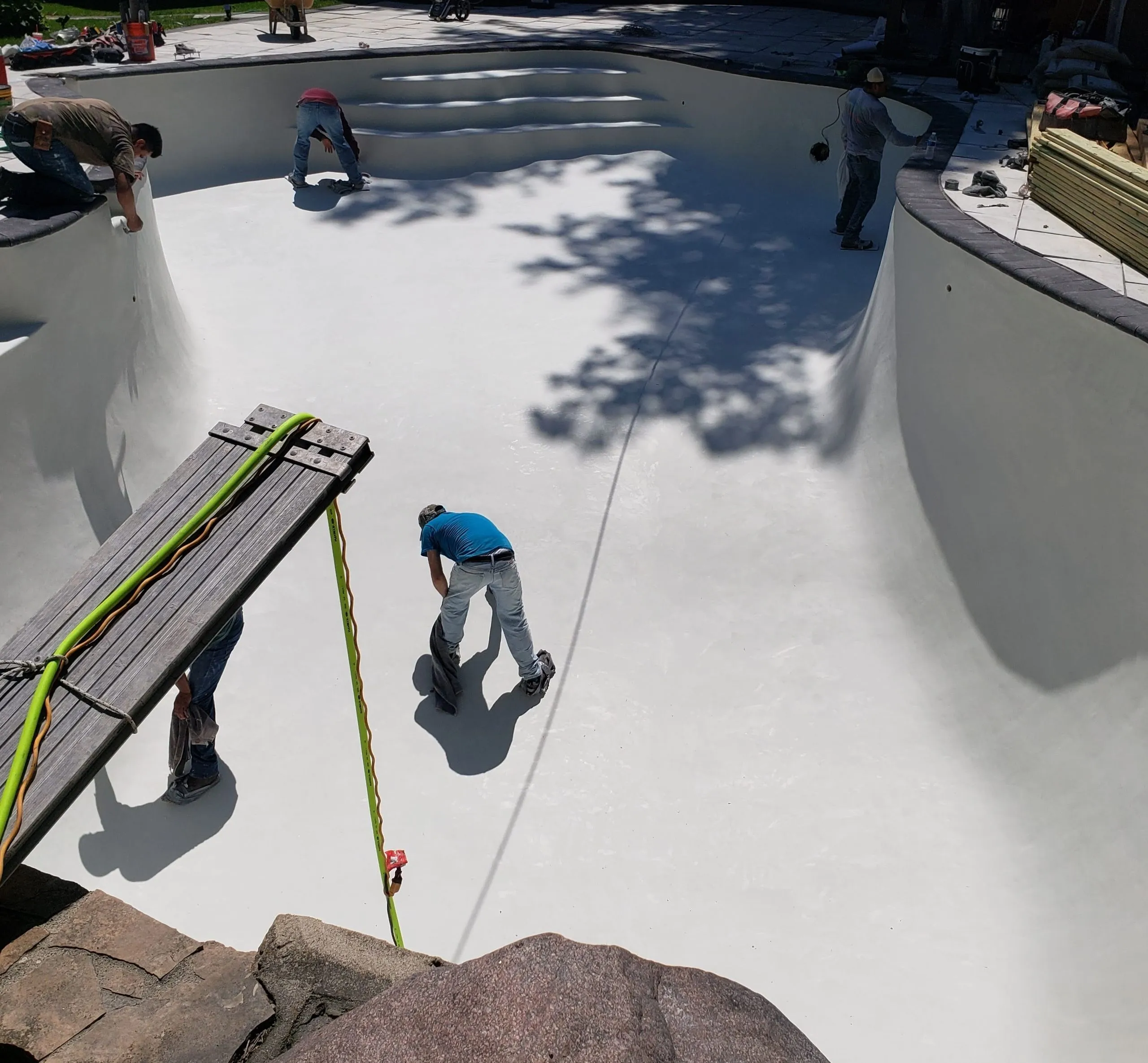
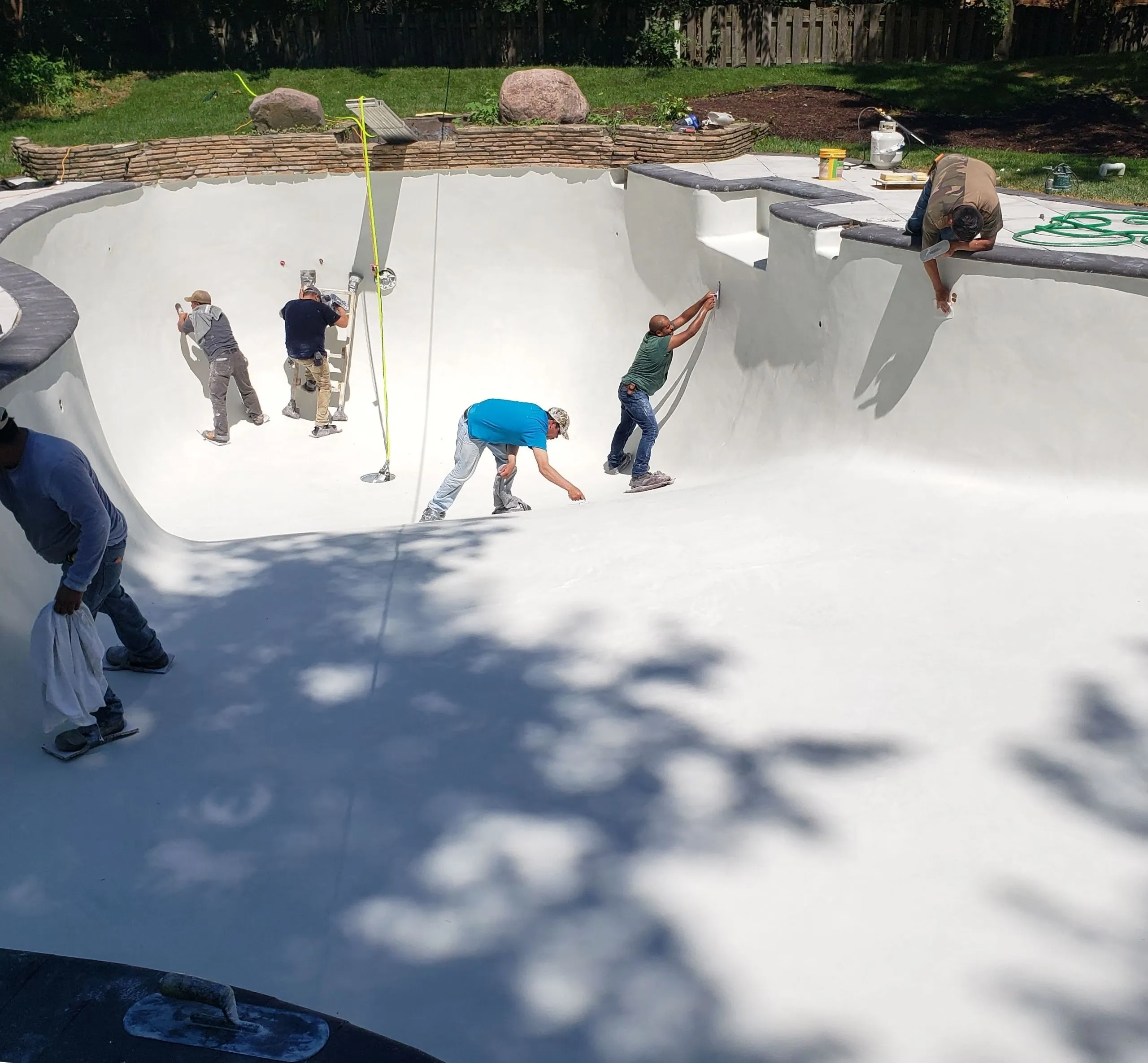
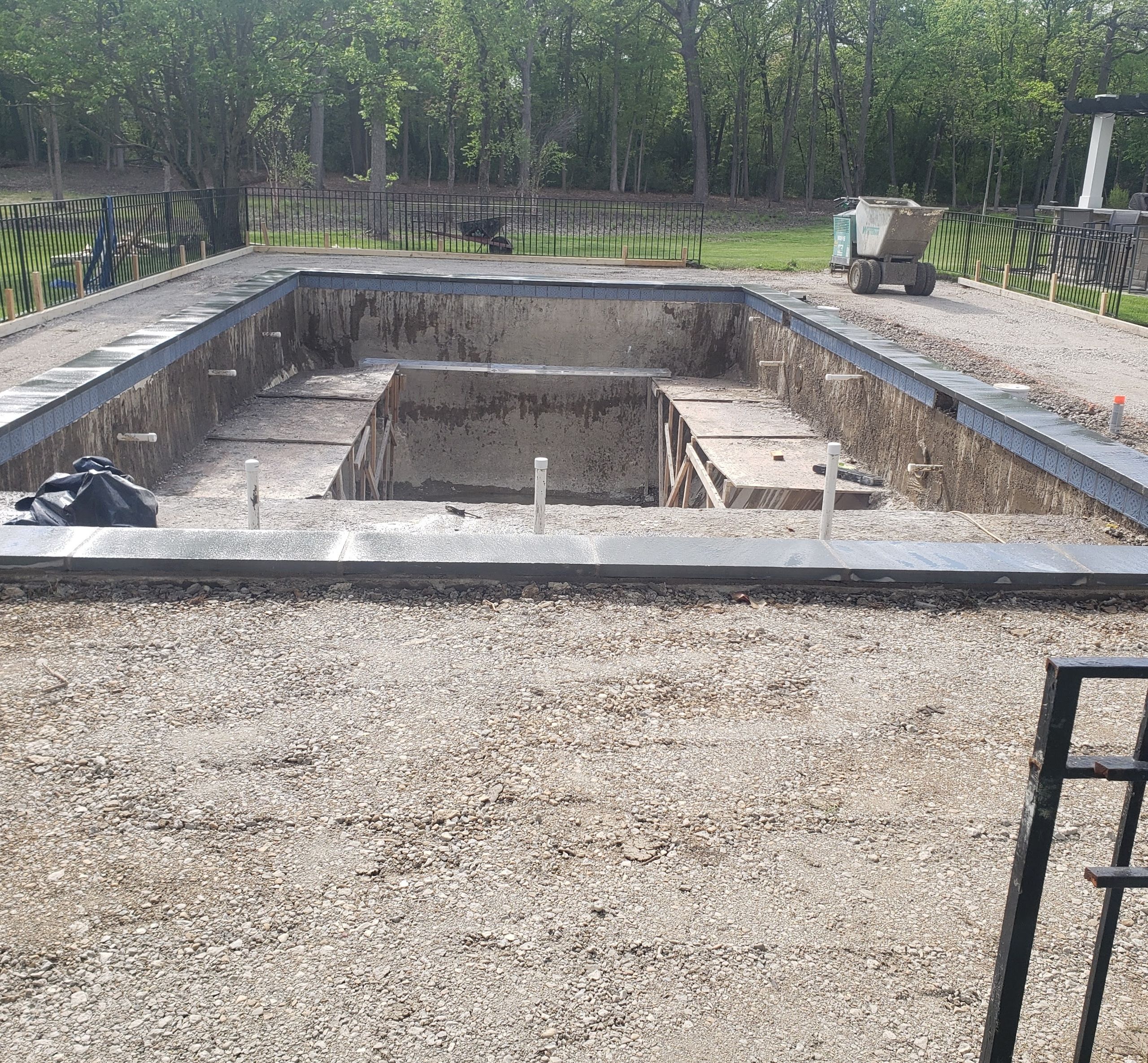
Replastering is a sequential process where each step depends on the one before it being done correctly, and skipping or rushing surface prep is the single most common reason a resurfacing job fails early. JG Pool Service follows the same core sequence on every project, from a straightforward marcite resurfacing to a full pebble and tile upgrade.
01
Draining and Surface Preparation
02
Structural Repair and Bond Coat
03
Finish Application and Curing
FAQ
How do I know if my pool needs replastering or just a repair?
Widespread cracking, rough or chalky texture across most of the surface, and visible gray or dark staining that won't clear with acid washing usually mean the plaster has reached the end of its service life. A single crack or small stained patch, on the other hand, can often be spot-repaired without a full resurfacing.
How long does pool replastering take in the Chicago area?
A standard resurfacing typically takes one to two weeks from draining to refilling, though weather and curing conditions can extend that timeline slightly in cooler months. Chemical balancing during the first thirty days after refilling is separate from the installation timeline and shouldn't be rushed.
Why is my pool plaster cracking after only a few years?
Cracking that shows up well before the finish's expected lifespan is usually tied to either a rushed cure period after the last resurfacing or persistent chemical imbalance eating into the plaster's bond. Chicago's freeze-thaw winters accelerate any existing weakness in the surface faster than milder climates do.
What's the difference between marcite, quartz, and pebble finishes?
Marcite is the standard, most affordable white plaster with the shortest typical lifespan; quartz aggregate adds hardness and color retention at a moderate price increase; pebble finishes cost the most upfront but generally last the longest and give the pool a textured, natural look.
Can you replace pool tile at the same time as replastering?
Yes, and it's a common pairing since the waterline tile band and the plaster surface usually age at a similar rate, especially in areas like Deerfield with higher moisture exposure. Coordinating both projects together, including our tile replacement service, avoids draining and refilling the pool twice.
Does replastering fix a pool that's losing water?
Not always. Replastering seals surface cracks and restores the finish, but a pool that's steadily losing water may have a plumbing or structural leak that needs to be located and repaired separately before or during the resurfacing.
How soon can I swim after my pool is replastered in Naperville or Deerfield?
The pool needs to be refilled immediately after plastering and typically requires about two weeks of careful chemical balancing before it's ready for normal swimming and full chemical treatment. Swimming too early, before the plaster has properly cured, can leave marks or soft spots on the new surface.
CONTACT FORM
Pool Service 
in Coral Springs, FL
JG Pool Service is your go-to company for all your pool maintenance needs. With years of experience in the industry, we specialize in providing professional pool cleaningnd more.