


Pool Painting in Northbrook, IL & Chicago Suburbs
Why Pool Paint Fails in Chicago's Freeze-Thaw Climate
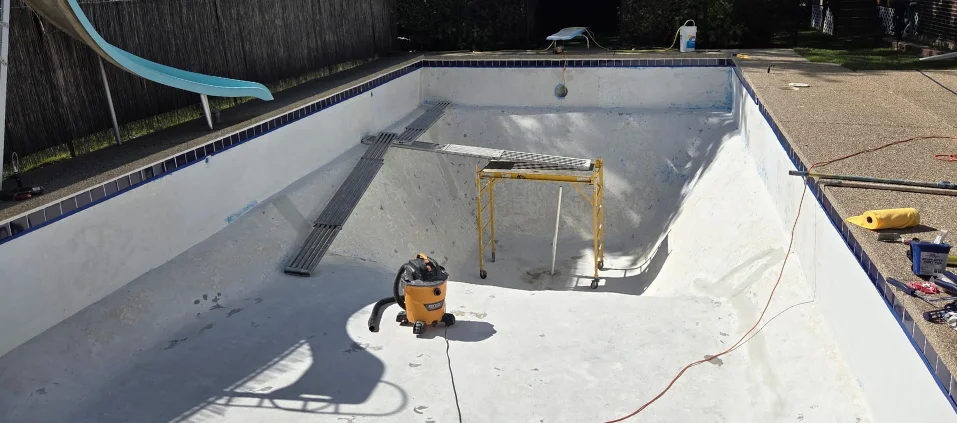
Pool paint is a maintenance coating, not a permanent surface, and in the Chicago suburbs it works against a climate that shortens its expected lifespan almost every year. A painted concrete or gunite pool typically needs recoating every two to five years depending on the paint type, and that window narrows further on pools that stay open into cooler fall weeks or reopen early in spring when the surface hasn't fully cured from the previous freeze. A pool painted well in Northbrook five seasons ago is now a reasonable candidate for the same peeling and flaking this section describes.
Improper paint compatibility is the second major driver of early failure in this region. Epoxy paint applied over an old rubber-base coating, or vice versa, doesn't bond correctly regardless of how carefully it's applied, and the mismatch shows up as bubbling or sheeting within one or two seasons rather than lasting through a normal repaint cycle. Add in the winterization habits common across Cook and Lake County, where water is drawn down and surfaces sit exposed through months of freeze-thaw cycling, and even a correctly matched paint job takes on stress that milder climates simply don't produce.
Sun exposure adds a third, slower-acting failure mode on top of the first two. UV breaks down the paint's pigment and binder over time, which is why a pool painted a rich blue often fades to a chalky pale version of that color well before the coating physically peels. Once that chalking starts, it rubs off on skin and swimsuits, which is usually the first visible sign owners notice, even though the coating underneath may still have a season or two of life left before it needs a full strip and recoat.
Peeling and Flaking
Chalking and Fading
Bubbling and Delamination
We Test Your Existing Coating Before Repainting
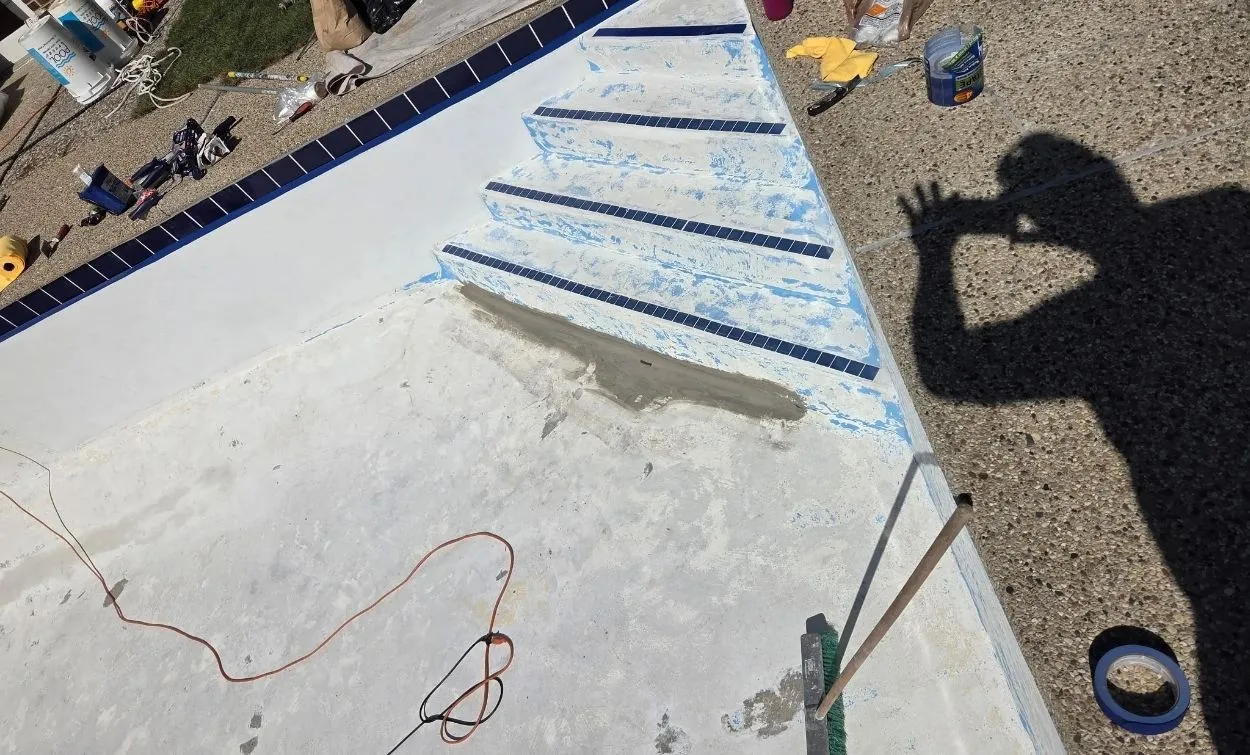
A peeling or chalking paint job doesn't just look worn, it changes how the pool holds water chemistry and how much work it takes to keep clean. Loose paint flakes clog filters and skimmer baskets faster than a smooth surface would. A correctly stripped, primed, and recoated pool resets both the appearance and the day-to-day maintenance load at the same time.
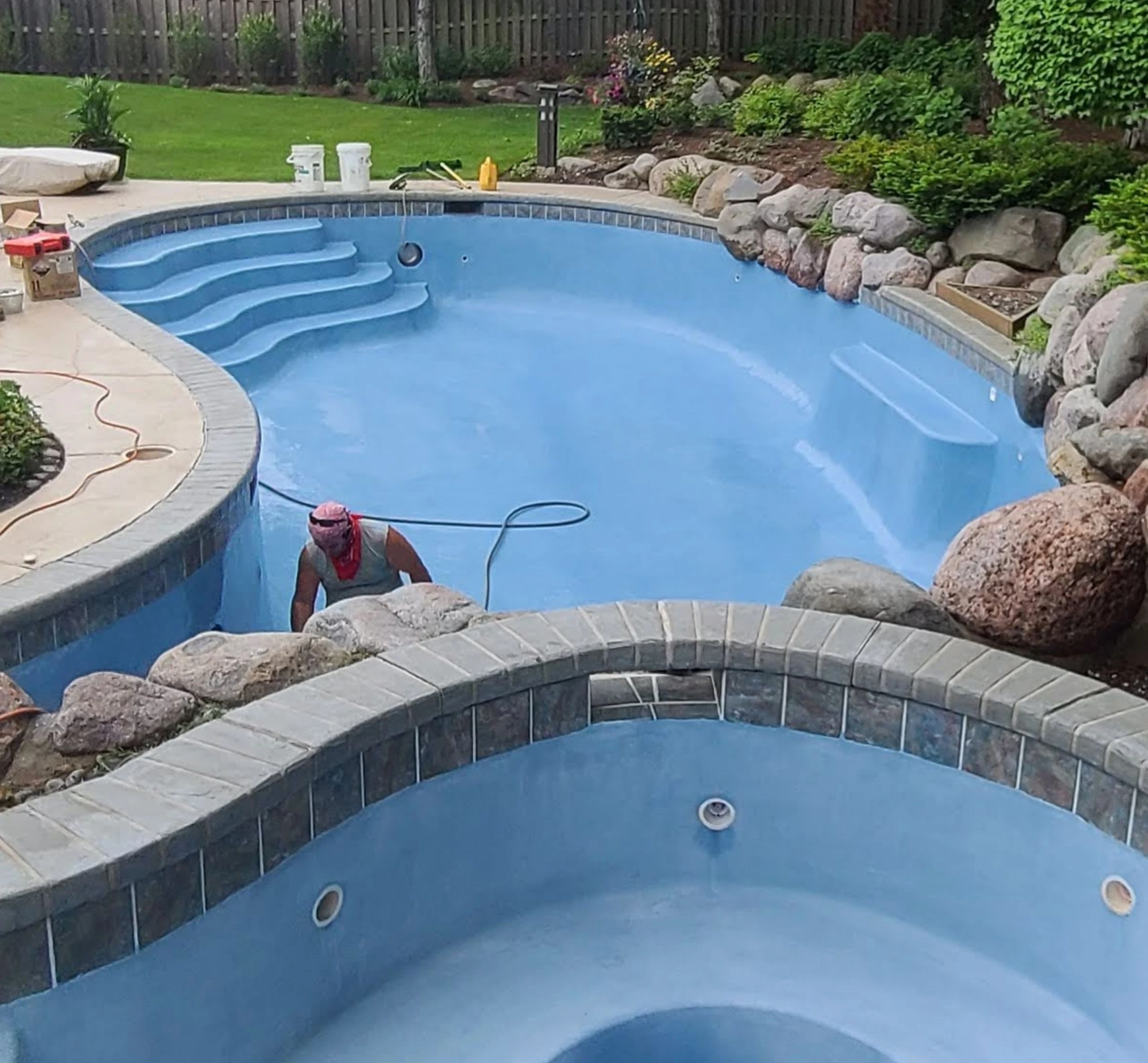
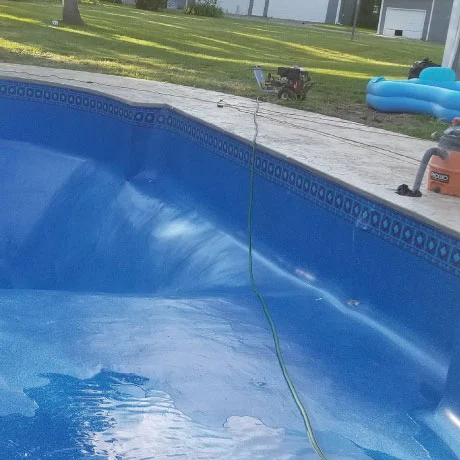
Getting a repaint right depends on matching the new coating to what's already on the pool, since epoxy, rubber-base, and acrylic paints don't bond reliably to each other and guessing wrong is the single most common reason a fresh paint job fails within a season. JG Pool Service tests the existing coating before quoting a repaint, rather than assuming the paint type from the pool's age or the color on the surface. That step alone is what separates a repaint that holds for its full expected lifespan from one that bubbles and peels before the following summer.
Beyond the coating itself, a full repaint is also a natural point to address smaller issues that are easier to fix with the pool drained and the surface exposed, from a worn skimmer that's due for replacement to hairline cracks around fittings that would otherwise go unnoticed under water. Handling those items in the same visit avoids draining the pool twice for two separate projects within the same year.
Restored Surface and Color
Easier Cleaning and Lower Chemical Demand
Lower Cost Than Full Replastering
Pool Paint Types and Finishes
Epoxy Pool Paint
Chlorinated Rubber Paint
Acrylic Pool Paint
Epoxy-Acrylic Hybrid Paint
Waterproof Cementitious Paint
Fiberglass-Safe Paint
Custom-Tinted Finishes
Anti-Slip Deck and Step Paint
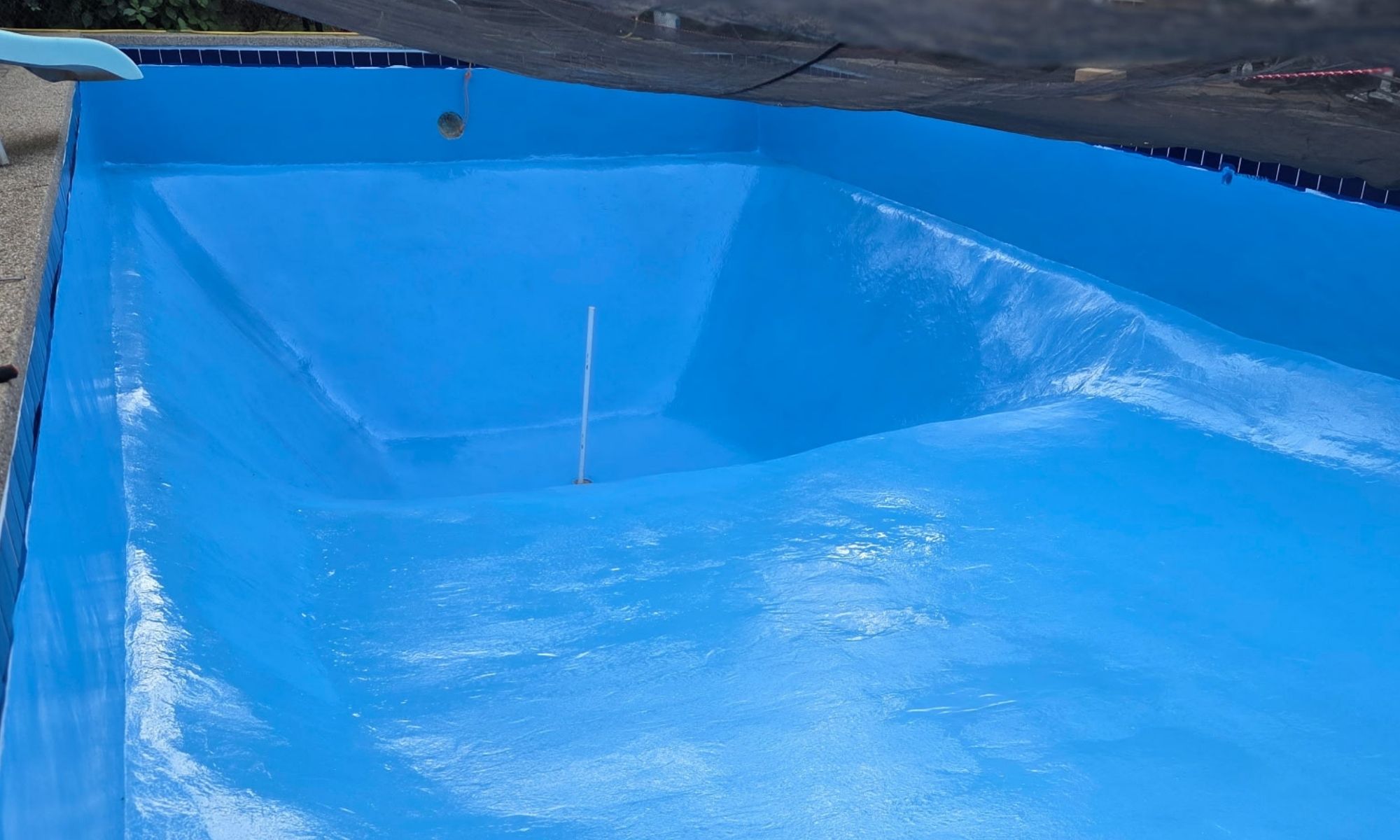
Our Pool Painting Process